
Thingiverse
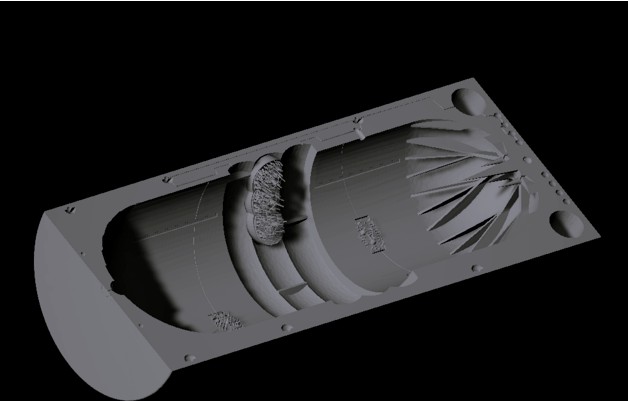
Rama scaled one in 500 thousand by tato_713
by Thingiverse
Last crawled date: 4 years, 11 months ago
This is the model of the colossal centrifugal alien spaceship from the Arthur C. Clarke book Rendezvous with Rama, one of the most popular hard science fiction books. I made this based on what I read from the first book on the serie and this image, apparently from the cover art of a video game, but not from any information from its sequels. I've read only an Spanish copy, so some details may be wrong because of translation issues and adaptations.
Before printing anything, please, read this paragraph. I made this in various parts, depending on the scale, so they can be printed separately, and then glued. Cities must be printed separately and they will fit very loose, so they must be fixed with hot glue, or something alike. The scales available in this post are:
One in 500 thousand. This is the smallest scale, about 10cm long. It can be made divided in north-center-south parts, or into longitudinal halves. The cities cannot be made in this scale.
One in 200 thousand. a 25cm long model. It can be made divided in north-center-south parts, or into longitudinal halves. Cities are extremely small and I am not entirely sure they can be made even using resin (SLA) printers, I don't have one to test them.
One in eighty thousand. It can be made divided in north-center-south parts, or into 12 smaller parts. This is a big model, it must be made in big printers (bigger than 25x25x20cm), or in several parts (showed in the image below). Cities may be printable even in FDM with a good configuration.
Order of parts
The file's names explained: name_1_x_10_y.stl is 1 : x * 10y. So _1_6_10_7 is 1:600000000 or one in 60 million.The accuracy of the model
The model was made taken these features as literal from the book:
The spaceship was a cylinder 50km long and 20km in diameter, although it can be expected aliens having different metrics, and these measures being actually rounded values instead of exact ones.
Everything has a triple redundancy architecture, linearly or 120 degree distribution.
The inner surface shape: concave in the north part (by its rotation), with three stairs; cylindrical plains divided by a sea: north hemisphere surface 8km from the rotational axis, and 50m above the sea level; and the south hemisphere 500m above the sea; the south pole has "horns", one bigger in the center
There are 6 "towns" on the plains:
London: closermost to a stair, a collection of tubes. It's located 15km East of Paris, which is equivalent to 120° counter clockwise.
Paris: in the middle way from the stairs to the sea. It looks like an storage section with buildings.
Rome. It's located 15km West to Paris, which is equivalent to 120° clockwise.
Moscow
Beijing
Tokio
A "city" in the middle of the sea, nicknamed "New York" after its shape. It's divided in three equally designed sections and it looks more alike a huge fabric than a city. It is located opposed to London (180°).
Some features were deliberately made different from the description in the book:
London, Paris, Rome and Moscow belong to the northern hemisphere. However, in order to keep the symmetry, I placed Moscow on the south hemisphere.
The towns were connected by "roads", but these roads are not explicit to be up or below the surrounding relief.
There are 6 trenches 100m wide that run axially on both hemispheres. Those trenches resulted to be giant lanterns. I made them wider so they are more recognisable.
I also made up a lot of details that are not described on the book:
The entrance is vaguely described, I played with its shape.
Only New York, Paris and London are described in the first book, I made the rest as cartoonish mockups of the Earther counterparts.
The cross-section features were taken from the videogame artwork; in the book the characters didn't dig below the habitable inner surface.
I spend part of my time making these models, letting them available and free for everyone. If you want to support my work, you can contribute with me here:
Other astronomical objects
Object
Scale [1:x]
K = 103 (thousand)M = 106 (million)G = 109 (billion)
Image
Inner planets and moons
Mercury
60M,
120M
Venus
60M,
120M,
250M
Earth
60M,
120M,
250M
Luna
20M,
60M
Mars
60M,
120M
Phobos and Deimos
200K,
500K
Artificial
Salyut 7
40, 48, 80, 160
Near Earth Asteroids
Moshup and Squannit
8K,
20K,
40K
Ra-Shalom
20K,
40K
Castalia
8K,
20K,
40K
Bacchus
8K,
20K
Bennu
3K,
8K
Ryugu
8K,
20K
Geographos
40K,
80K
Phaethon
40K,
80K
Itokawa
3K,
8K
Eros
200K,
500K
Mithra
20K,
40K
Golevka
8K
Toutatis
40K,
80K
Main Asteroid Belt
Gaspra
200K
Annefrank
40K,
80K
Braille
20K,
40K
Vesta
4M,
10M
Šteins
40K,
80K,
200K
Iris
2M,
4M
Hebe
1M,
2M,
4M
Lutetia
1M,
2M
Julia
1M,
2M,
4M
Mathilde
500K,
1M
Juno
2M,
4M
Ceres
4M,
10M
Pallas
4M,
10M
Kleopatra
2M,
4M
Ida
500K,
1M
Psyche
2M,
4M
Interamnia
2M,
4M
Hygiea
2M,
4M,
10M
Antiope
1M,
2M
Jovian System
Jupiter
1G
Amalthea
2M,
4M
Thebe
1M,
2M
Io
20M,
60M
Europa
20M,
60M
Ganymede
60M,
120M
Callisto
60M,
120M
Saturn System
Saturn
500M,
1G
Pan, Daphnis and Atlas
80K,
200K,
500K,
1M
Prometheus and Pandora
1M,
2M
Janus and Epimetheus
2M,
4M
Mimas
2M,
4M,
10M
Methone, Anthe and Pallene
40K,
80K
Enceladus
4M,
10M
Tethys
10M
Telesto and Calypso
200K,
500K
Dione
10M
Helene
500K,
1M
Rhea
10M,
20M
Titan
60M,
120M
Hyperion
2M,
4M
Iapetus
10M,
20M
Phoebe
2M,
4M
Uranian System
Uranus
250M,
500M,
1G
Puck
1M,
2M,
4M
Miranda
4M,
10M
Ariel
10M
Umbriel
10M
Titania
10M,
20M
Oberon
10M,
20M
Neptunian System
Neptune
250M,
500M,
1G
Larissa
2M,
4M
Proteus
2M,
4M,
10M
Triton
20M
Comets
Tempel 1
40K,
80K,
200K
Wild 2
40K,
80K
Churyumov-Gerasimenko
40K,
80K
Hartley 2
20K,
40K,
80K
Borrelly
40K,
80K,
200K
Halley
80K,
200K
Centaurs and TNOs
Hidalgo
500K, 1M
Chariklo
2M,
4M
Pluto and Charon
10M,
20M
Styx, Nix, Kerberos and Hydra
500K,
1M
Haumea, Namaka and Hiʻiaka
10M,
20M
Arrokoth
200K,
500K,
1M
Largest TNOs and their moons
10M,
20M
Extrasolar
Exoplanets
120M,
250M,
500M
Nearest white dwarfs
120M,
250M
HD 189733 b
1G
Pulsars
200K,
500K
Cygnus X-1 accretion disk
10M,
20M
Sky maps
Heliosphere
7.5*1013, 1.5*1014
Constellations
-
CMBR
2*1028
Ancient
Earth (540 Mya to 20 Mya)
60M,
120M,
250M
Luna (4 Gya)
20M,
60M
Hypothetical and simulations
Planet Nine
250M,
500M
Cube planet
60M,
120M,
250M
Science Fiction
Ghroth
4M,
10M
Arda
60M,
120M
B612
10, 20, 32, 40
Mesklin
500M,
1G
Arrakis
60M,
120M
Borg cube
20K,
40K
Pern
60M,
120M
Europa Monolith
200K,
500K
Leonora Christine
500, 600, 1K, 3K
Rama
80K, 200K, 500K
Death Star
1M, 2M
Starkiller Base
4M,
10M
Nirn, Secunda and Masser
20M,
60M,
120M
Independence Day mothership
2M,
4M,
10M
Arrival heptapod spaceship
1K,
3K,
8K
Halo Array
4M,
10M, 20M, 60M
Gem Homeworld
120M, 250M, 500M
Misc
Mars (1962 reconstruction)
60M,
120M
Flat Earth
250M
Expanding Earth
60M, 120M
Spaceship of Ezekiel
80, 160
Before printing anything, please, read this paragraph. I made this in various parts, depending on the scale, so they can be printed separately, and then glued. Cities must be printed separately and they will fit very loose, so they must be fixed with hot glue, or something alike. The scales available in this post are:
One in 500 thousand. This is the smallest scale, about 10cm long. It can be made divided in north-center-south parts, or into longitudinal halves. The cities cannot be made in this scale.
One in 200 thousand. a 25cm long model. It can be made divided in north-center-south parts, or into longitudinal halves. Cities are extremely small and I am not entirely sure they can be made even using resin (SLA) printers, I don't have one to test them.
One in eighty thousand. It can be made divided in north-center-south parts, or into 12 smaller parts. This is a big model, it must be made in big printers (bigger than 25x25x20cm), or in several parts (showed in the image below). Cities may be printable even in FDM with a good configuration.
Order of parts
The file's names explained: name_1_x_10_y.stl is 1 : x * 10y. So _1_6_10_7 is 1:600000000 or one in 60 million.The accuracy of the model
The model was made taken these features as literal from the book:
The spaceship was a cylinder 50km long and 20km in diameter, although it can be expected aliens having different metrics, and these measures being actually rounded values instead of exact ones.
Everything has a triple redundancy architecture, linearly or 120 degree distribution.
The inner surface shape: concave in the north part (by its rotation), with three stairs; cylindrical plains divided by a sea: north hemisphere surface 8km from the rotational axis, and 50m above the sea level; and the south hemisphere 500m above the sea; the south pole has "horns", one bigger in the center
There are 6 "towns" on the plains:
London: closermost to a stair, a collection of tubes. It's located 15km East of Paris, which is equivalent to 120° counter clockwise.
Paris: in the middle way from the stairs to the sea. It looks like an storage section with buildings.
Rome. It's located 15km West to Paris, which is equivalent to 120° clockwise.
Moscow
Beijing
Tokio
A "city" in the middle of the sea, nicknamed "New York" after its shape. It's divided in three equally designed sections and it looks more alike a huge fabric than a city. It is located opposed to London (180°).
Some features were deliberately made different from the description in the book:
London, Paris, Rome and Moscow belong to the northern hemisphere. However, in order to keep the symmetry, I placed Moscow on the south hemisphere.
The towns were connected by "roads", but these roads are not explicit to be up or below the surrounding relief.
There are 6 trenches 100m wide that run axially on both hemispheres. Those trenches resulted to be giant lanterns. I made them wider so they are more recognisable.
I also made up a lot of details that are not described on the book:
The entrance is vaguely described, I played with its shape.
Only New York, Paris and London are described in the first book, I made the rest as cartoonish mockups of the Earther counterparts.
The cross-section features were taken from the videogame artwork; in the book the characters didn't dig below the habitable inner surface.
I spend part of my time making these models, letting them available and free for everyone. If you want to support my work, you can contribute with me here:
Other astronomical objects
Object
Scale [1:x]
K = 103 (thousand)M = 106 (million)G = 109 (billion)
Image
Inner planets and moons
Mercury
60M,
120M
Venus
60M,
120M,
250M
Earth
60M,
120M,
250M
Luna
20M,
60M
Mars
60M,
120M
Phobos and Deimos
200K,
500K
Artificial
Salyut 7
40, 48, 80, 160
Near Earth Asteroids
Moshup and Squannit
8K,
20K,
40K
Ra-Shalom
20K,
40K
Castalia
8K,
20K,
40K
Bacchus
8K,
20K
Bennu
3K,
8K
Ryugu
8K,
20K
Geographos
40K,
80K
Phaethon
40K,
80K
Itokawa
3K,
8K
Eros
200K,
500K
Mithra
20K,
40K
Golevka
8K
Toutatis
40K,
80K
Main Asteroid Belt
Gaspra
200K
Annefrank
40K,
80K
Braille
20K,
40K
Vesta
4M,
10M
Šteins
40K,
80K,
200K
Iris
2M,
4M
Hebe
1M,
2M,
4M
Lutetia
1M,
2M
Julia
1M,
2M,
4M
Mathilde
500K,
1M
Juno
2M,
4M
Ceres
4M,
10M
Pallas
4M,
10M
Kleopatra
2M,
4M
Ida
500K,
1M
Psyche
2M,
4M
Interamnia
2M,
4M
Hygiea
2M,
4M,
10M
Antiope
1M,
2M
Jovian System
Jupiter
1G
Amalthea
2M,
4M
Thebe
1M,
2M
Io
20M,
60M
Europa
20M,
60M
Ganymede
60M,
120M
Callisto
60M,
120M
Saturn System
Saturn
500M,
1G
Pan, Daphnis and Atlas
80K,
200K,
500K,
1M
Prometheus and Pandora
1M,
2M
Janus and Epimetheus
2M,
4M
Mimas
2M,
4M,
10M
Methone, Anthe and Pallene
40K,
80K
Enceladus
4M,
10M
Tethys
10M
Telesto and Calypso
200K,
500K
Dione
10M
Helene
500K,
1M
Rhea
10M,
20M
Titan
60M,
120M
Hyperion
2M,
4M
Iapetus
10M,
20M
Phoebe
2M,
4M
Uranian System
Uranus
250M,
500M,
1G
Puck
1M,
2M,
4M
Miranda
4M,
10M
Ariel
10M
Umbriel
10M
Titania
10M,
20M
Oberon
10M,
20M
Neptunian System
Neptune
250M,
500M,
1G
Larissa
2M,
4M
Proteus
2M,
4M,
10M
Triton
20M
Comets
Tempel 1
40K,
80K,
200K
Wild 2
40K,
80K
Churyumov-Gerasimenko
40K,
80K
Hartley 2
20K,
40K,
80K
Borrelly
40K,
80K,
200K
Halley
80K,
200K
Centaurs and TNOs
Hidalgo
500K, 1M
Chariklo
2M,
4M
Pluto and Charon
10M,
20M
Styx, Nix, Kerberos and Hydra
500K,
1M
Haumea, Namaka and Hiʻiaka
10M,
20M
Arrokoth
200K,
500K,
1M
Largest TNOs and their moons
10M,
20M
Extrasolar
Exoplanets
120M,
250M,
500M
Nearest white dwarfs
120M,
250M
HD 189733 b
1G
Pulsars
200K,
500K
Cygnus X-1 accretion disk
10M,
20M
Sky maps
Heliosphere
7.5*1013, 1.5*1014
Constellations
-
CMBR
2*1028
Ancient
Earth (540 Mya to 20 Mya)
60M,
120M,
250M
Luna (4 Gya)
20M,
60M
Hypothetical and simulations
Planet Nine
250M,
500M
Cube planet
60M,
120M,
250M
Science Fiction
Ghroth
4M,
10M
Arda
60M,
120M
B612
10, 20, 32, 40
Mesklin
500M,
1G
Arrakis
60M,
120M
Borg cube
20K,
40K
Pern
60M,
120M
Europa Monolith
200K,
500K
Leonora Christine
500, 600, 1K, 3K
Rama
80K, 200K, 500K
Death Star
1M, 2M
Starkiller Base
4M,
10M
Nirn, Secunda and Masser
20M,
60M,
120M
Independence Day mothership
2M,
4M,
10M
Arrival heptapod spaceship
1K,
3K,
8K
Halo Array
4M,
10M, 20M, 60M
Gem Homeworld
120M, 250M, 500M
Misc
Mars (1962 reconstruction)
60M,
120M
Flat Earth
250M
Expanding Earth
60M, 120M
Spaceship of Ezekiel
80, 160