
Thingiverse
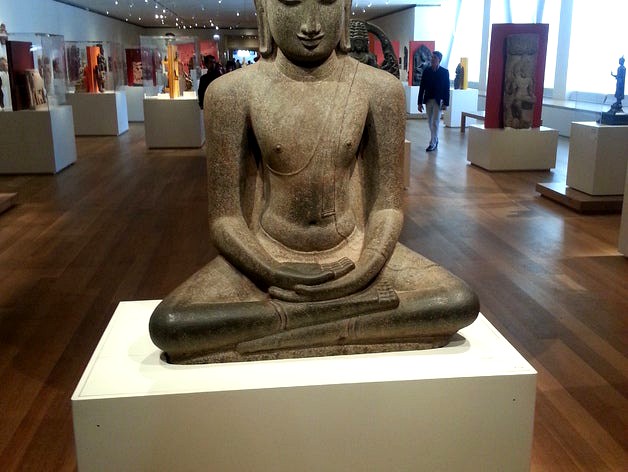
Buddha Seated in Meditation (Dhyanamudra), Chola period, c. 12th century, Art Institute of Chicago by tomburtonwood
by Thingiverse
Last crawled date: 4 years, 7 months ago
India
Tamil Nadu, Nagapattinam
Buddha Seated in Meditation (Dhyanamudra), Chola period, c. 12th century
Granite
160.0 x 120.2 x 56.3 cm (63 x 47 5/16 x 22 3/16 in.)
Restricted gift of Mr. and Mrs. Robert Andrew Brown, 1964.556
Asian Art
Display Unit 401
This meditating Buddha comes from the coastal town of Nagapattinam in southern India, which was, as a result of settlers from Srivijaya (Indonesia), one of the few places where Buddhism was still flourishing in the twelfth century. The Buddhaâwith his elongated earlobes, the wheel marks on his palms, the urna between his brows, and the cranial protuberance covered with snail-shell curlsâis seated in the posture of meditation, with his hands resting on his lap (dhyanamudra), wearing a seemingly diaphanous monastic garment. As in other images from Nagapattinam, a flame emerges out of the Buddhaâs cranial protuberance, probably signifying wisdom. This monumental sculpture carved out of granite originally would have graced a monastic site at Nagapattinam, which is also well known for its Buddhist bronzes. The Tamil inscription covering its back is now no longer legible.
â Entry, Essential Guide, 2013, p. 117.
http://www.artic.edu/aic/collections/artwork/21023?search_no=29&index=57
Tamil Nadu, Nagapattinam
Buddha Seated in Meditation (Dhyanamudra), Chola period, c. 12th century
Granite
160.0 x 120.2 x 56.3 cm (63 x 47 5/16 x 22 3/16 in.)
Restricted gift of Mr. and Mrs. Robert Andrew Brown, 1964.556
Asian Art
Display Unit 401
This meditating Buddha comes from the coastal town of Nagapattinam in southern India, which was, as a result of settlers from Srivijaya (Indonesia), one of the few places where Buddhism was still flourishing in the twelfth century. The Buddhaâwith his elongated earlobes, the wheel marks on his palms, the urna between his brows, and the cranial protuberance covered with snail-shell curlsâis seated in the posture of meditation, with his hands resting on his lap (dhyanamudra), wearing a seemingly diaphanous monastic garment. As in other images from Nagapattinam, a flame emerges out of the Buddhaâs cranial protuberance, probably signifying wisdom. This monumental sculpture carved out of granite originally would have graced a monastic site at Nagapattinam, which is also well known for its Buddhist bronzes. The Tamil inscription covering its back is now no longer legible.
â Entry, Essential Guide, 2013, p. 117.
http://www.artic.edu/aic/collections/artwork/21023?search_no=29&index=57